


1. When did you first travel to the Amazon or start working with Ayahuasca?
I first traveled to the Amazon around 18 years ago, Dr Marjorie is Peruvian with a lineage from the Jungle.
We both were initially drawn by a pretty deep personal calling, mine was due to a pretty abrupt shift from studying in India initially but we both were also curious about the parallels between indigenous Amazonian healing and Ayurveda beforehand. Our first sessions with the medicine enhanced our understanding of the body, mind, and spirit—and planted the seed for what would later become the AYAVIDA program as Ayahuasca broadened and highlighted all our understanding of tte Ayurvedic principles in that first visit.
2. How early on did you see the potential of Ayurveda as a preparation tool for Ayahuasca retreats was it from that first experience?
Almost immediately. Ayurveda has a sophisticated approach to purification, mental clarity, and emotional readiness. When I saw guests struggling with integration or entering ceremonies energetically unprepared, I knew that Ayurvedic tools—like dinacharya (daily routine), sattvic nutrition, marma therapy, and doshic balancing—could offer a stable foundation. It’s not just physical cleansing; it’s a spiritual attunement and the Shamanic rituals can offer a more multifaceted approach to this too.

3. How long should someone commit to your Ayurvedic AYAVIDA program for best results?
Ideally, a 6 months preparation period prior to ceremony but obviously most people cant see why this would be the case initially but most clients understood this within the first two consultations. This allows time for dietary purification, emotional grounding, and nervous system recalibration. If someone has time constraints, we offer a condensed 5 day Detox protocol, but the depth of benefit is proportional to the commitment. Post-ceremony, we encourage at least 6 months of integration support using Ayurvedic rasayanas (rejuvenatives), journaling, and subtle body practices.
4. How do you delegate the best possible way to offer a retreat for someone?
It starts with a full assessment as we look at the person’s dosha, their current state of balance (vikruti), their past trauma exposure, and spiritual openness which we use as our referral to our Facilitator etc.
Some people need more grounding, others need to lighten and release. We then build a personalized arc, Ayurvedic prep, proper dieta, gentle ceremony pacing, and deep post-retreat care. Our team works collaboratively, combining Ayurvedic insights, Shipibo wisdom, and psychological support to create a safe, coherent journey for each participant as we should consider the collective empirical wisdom of our team to ensure we cover all the bases.

5. As what you do is so different to other places in regards to training, do you feel these centres that offer apprenticeships are doing this ethically?
Short answer: no. Many of these apprenticeship models are built less on lineage transmission and more on a referral-based business structure. Shamans train Westerners who then bring in more participants, and the cycle becomes more about expansion than integrity. It’s a spiritual pyramid scheme disguised as mentorship, and that’s a dangerous dynamic when dealing with such vulnerable states of consciousness, then these inexperienced go out and serve medicine and further dilute this work and open the potential for ruining the public’s view of this medicine.
6. I’ve read that you think Pitta types tend to desire to become Shamans—why is that?
Yes, Absolutely. It’s related to power dynamics primarily as Pitta types are naturally driven, charismatic, and often seen as leaders. When that fire is imbalanced which generally it is as this medicine can increase Rajas or Fire thus will increase their competitiveness. They are better used for organizing these retreats as they’re focused on the minor details, design etc
An unbalanced Pitta person will have qualities that manifest as ego inflation, control dynamics, or narcissism especially in a ceremonial space where others are looking to them for transformation they will try to impose their presence or control the ceremonial space rather than contributing to it.
But hey, add onto top of that physical attractiveness or intellectual sharpness into the mix, and it’s a cocktail that can easily go from magnetic to manipulative. This is why deep self-inquiry, healing and mentorship are so crucial before stepping into any facilitator role or undertaking an apprenticeship. If you find a Kapha Shaman you’re going to find a much sweeter and heart oriented person naturally…
7. So your role is to give the Ayurvedic treatments and your team in Iquitos runs the ceremonies?
Yes, exactly. Our primary role is to prepare and support guests through Ayurvedic therapies physically, emotionally, and energetically. This includes personalized treatment plans, detox protocols, breathwork, and subtle body work like marma or abhyanga. Once guests are in Iquitos, our Shipibo-trained facilitators and curanderos hold the ceremonies, while I remain in close contact to monitor how the Ayurvedic preparation is translating into their treatment here.
8. Do you see yourself doing this in the future on your property in Tarapoto?
Definitely—that’s the vision and always has been from the beginning. We both love our little patch of land and are working daily towards that vision.
In our opinion Tarapoto offers a quieter, more integrative landscape than Iquitos. I see it as the future home of a fully integrated healing center, where Ayurveda and plant medicine are not separate paths but intertwined. We’ll continue to collaborate with trusted indigenous partners for ceremony work, but my dream is to create a retreat rhythm where guests spend more time in pre- and post-ceremony integration—held gently in nature, with Ayurvedic grounding throughout and with any luck all will be via donation.


9. Oh, so you plan to do it via donation?
Yes, the Ayurvedic therapies will be offered by donation or at very low cost, just enough to honor the time and energy it takes to hold that space. The plants themselves—local herbs, oils, resins—are so abundant and affordable here that we don’t want cost to be a barrier. That said, we won’t be holding Ayahuasca ceremonies ourselves. That work will remain with the Shipibo and other master curanderos. Our focus is preparation, integration, and long-term healing—supporting the ceremony, not replacing it.

10. I see you spent time with Tibetan Oracles, Amchi, and the Kallawaya in Bolivia? How did this happen? Did you see similarities with Ayurveda and Shamanism in those practices?
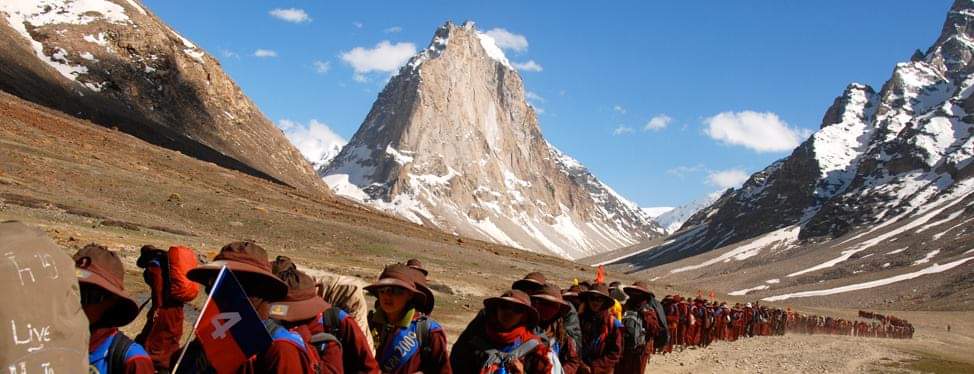
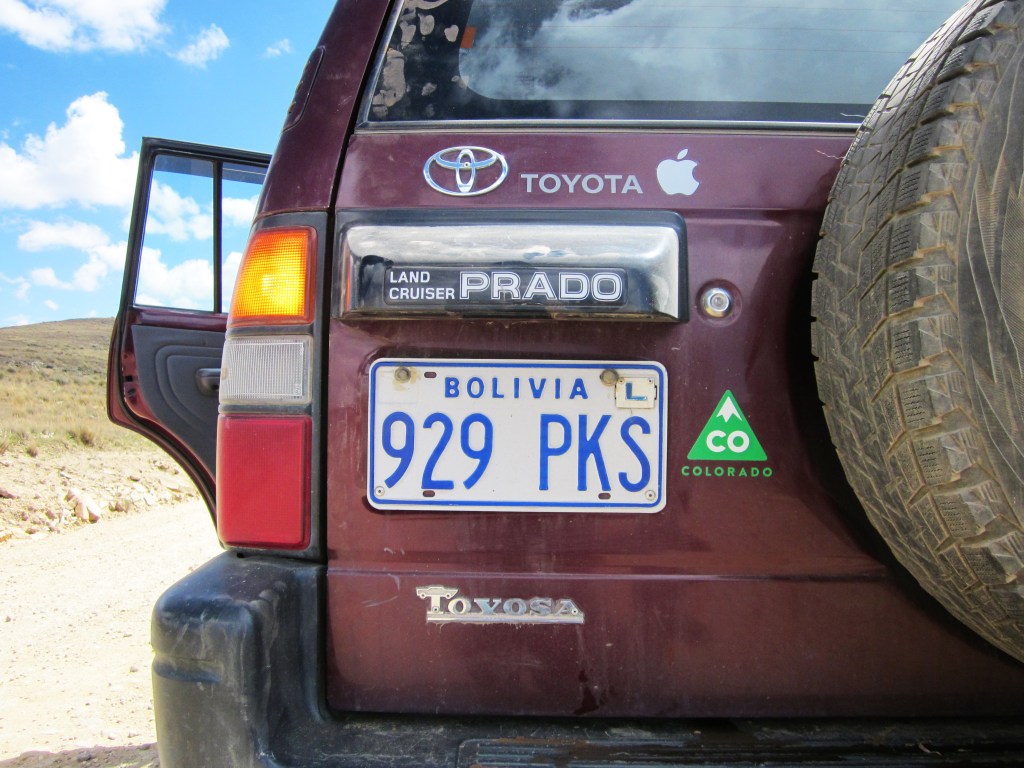
Yes, those experiences profoundly shaped my path. I connected with the Amchi lineage and oracular traditions in Ladakh during a long period of study and pilgrimage in the Himalayas. Later, my journey took me to Bolivia, where I worked with Kallawaya healers, one of the few remaining groups to preserve a pre-Columbian medical tradition deeply rooted in both herbal knowledge and ceremonial cosmology.
What struck me immediately—and continues to inspire my work—is that all of these systems share an elemental worldview.
In Ayurveda, the body is composed of the five elements (earth, water, fire, air, and ether), and health is the harmonious expression of those elements in the form of doshas. The Amchi system of Tibetan medicine shares this same elemental base, though it expresses it through wind, bile, and phlegm—strikingly similar to Vata, Pitta, and Kapha.
In Kallawaya medicine, healing comes through the alignment with Pachamama and the elements of the land – earth (pachamama), fire (inti), air (wayra), and water (yaku). These are not just poetic metaphors; they are living forces that interact with the body and psyche. Ceremony, diet, herbalism, and ritual all work together to re-establish harmony between the person and the elements around and within them.
And in Peru, particularly among Shipibo and Quechua lineages, there is a profound awareness of how the elements animate the plants, influence the Icaros (healing songs), and move through the body during ceremony. Ayahuasca itself is often understood as carrying the energies of both earth and water, with the songs and breath of the healer invoking air and fire to bring about transformation.

The deeper I traveled into these lineages, the clearer it became: this isn’t cultural coincidence—it’s a shared understanding of nature’s intelligence. These systems aren’t just medicinal; they’re cosmological. Healing is not reductionist—it’s relational. The body, the land, the ancestors, the spirits—they are all expressions of elemental energy, and illness is what happens when that sacred balance is lost.
So for me, Ayurveda isn’t just Indian. It’s a language within a global ancestral knowledge system that sees health as harmony with the living elements of creation.
That’s the thread that connects Ladakh, Bolivia, Peru, and India—and it’s the foundation of everything I offer now. Not to mention the mythology related to the Rainbow Serpent energy that runs from Australia through the Himalayan mountains and The Andes.. Dr Marjorie travelled pretty extensively too and also learnt body therapy and herbalism in Bali and Slovenia, Ayurveda in Australia and of course this was on top of her degree in medicine. We try to apply all of this when assessing and/or treating someone.

 Medicina del sol